

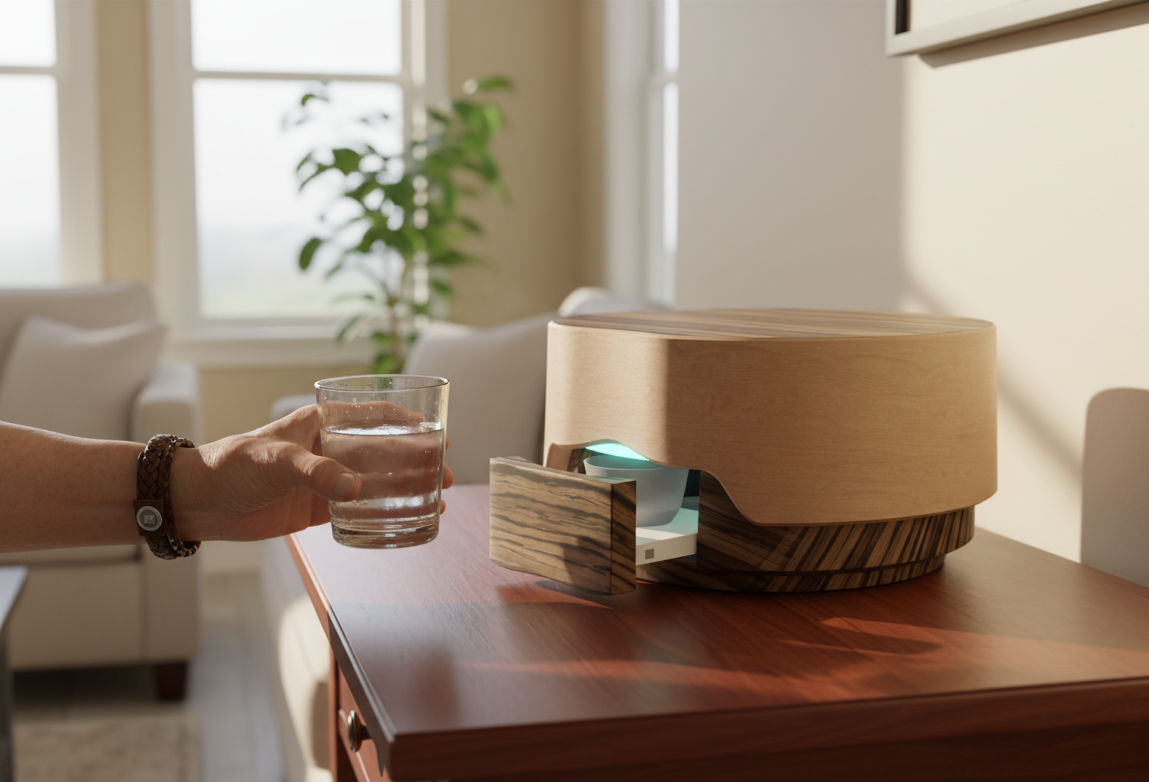

Care by design. Life by choice.
Photorealistic rendering. Setting generated with AI.

Giulia is 47
Her mother Anna is 74 and takes eight medications a day, at different times. Sometimes the regimen changes after a few months, adding to the confusion.
Giulia checks three times a day. Sometimes she wakes up at night anxious because she hasn't seen a reply to her message.
It is the exhaustion of someone who can never stop thinking about it.

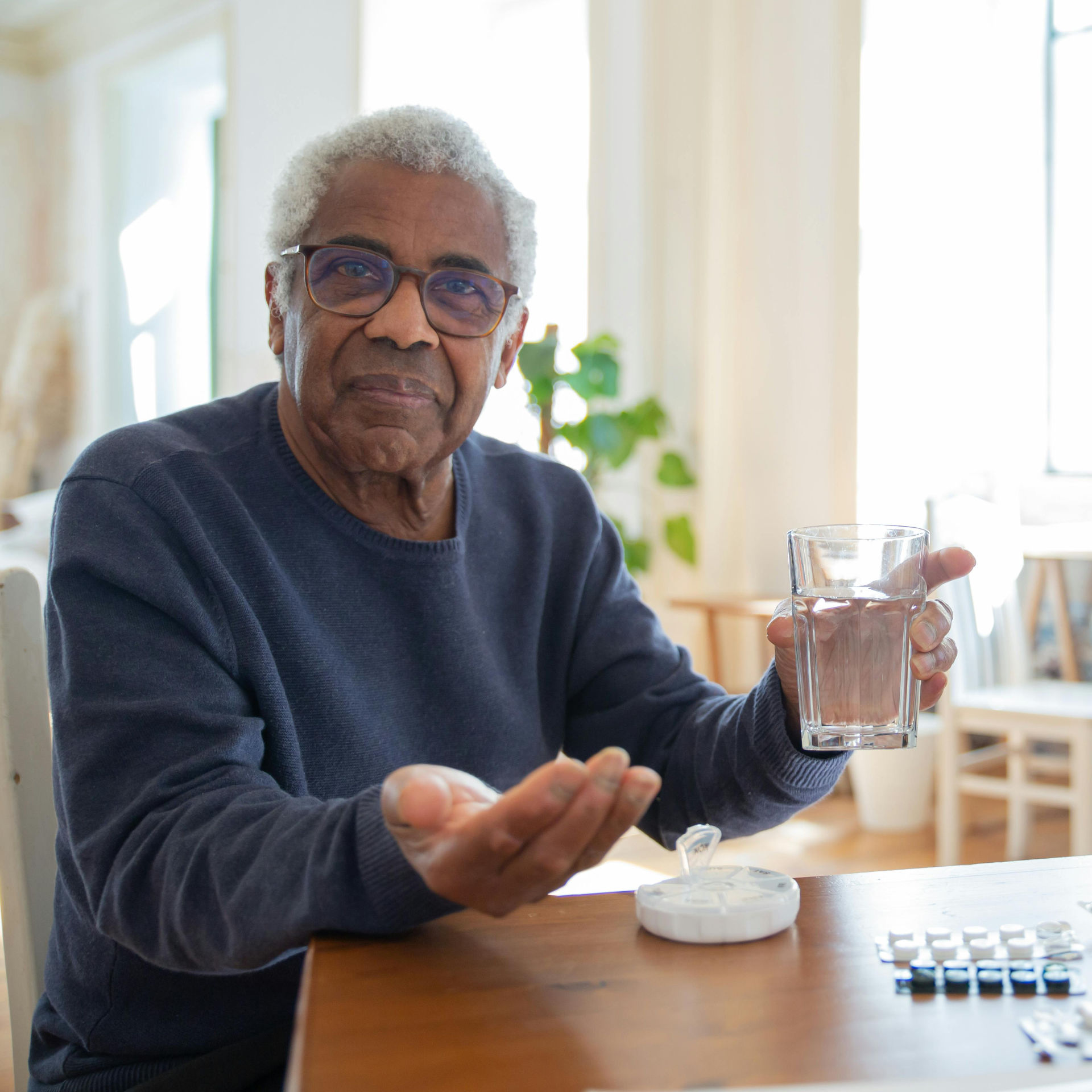
Mario is 76
He lives alone. Sharp, active, curious.
He manages a complex polypharmacy regimen with discipline, except when he forgets, when he mixes up the boxes, when Monday feels the same as Wednesday.
In those moments, frustration sets in.
Omiari starts here.
From the exhaustion of those who care, and the desire of those who want to keep living with dignity.
An object that reimagines care
The Omiari dispenser is the first product in an ecosystem that connects home, pharmacy and healthcare providers. Its form is the result of careful research into proportions, materials and interactions. Every detail responds to a real need. The choice of materials for additive printing follows the same logic as the project: every parameter, including the feel to the touch, must be consistent with the same values. In the photos, the outcome of this process.
Six bodies. Ten cartridges. One form.
Every form is an answer. The result of a methodical process:
prototyping, testing, feedback, revision.
Six generations for the device body. Ten for the refillable cartridge.
The current version is what remains after removing everything superfluous.
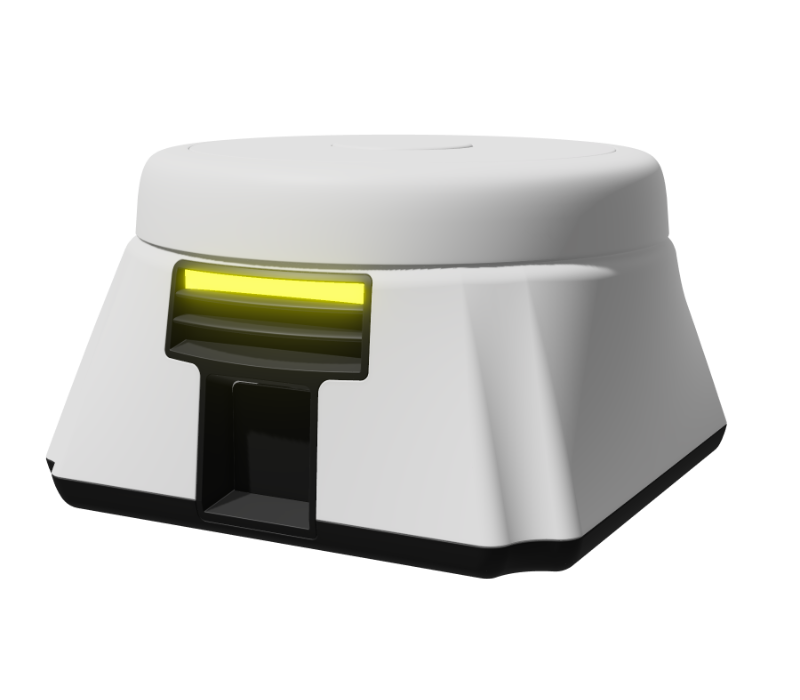
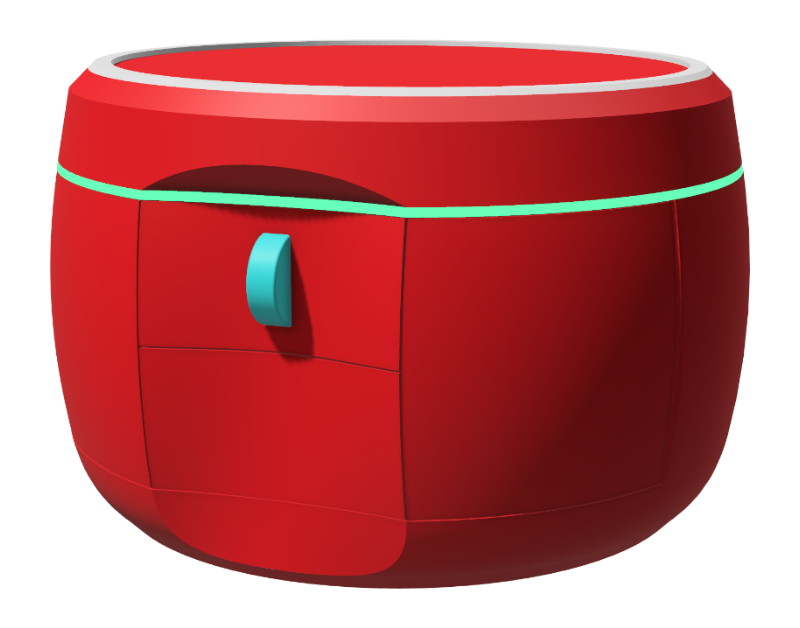
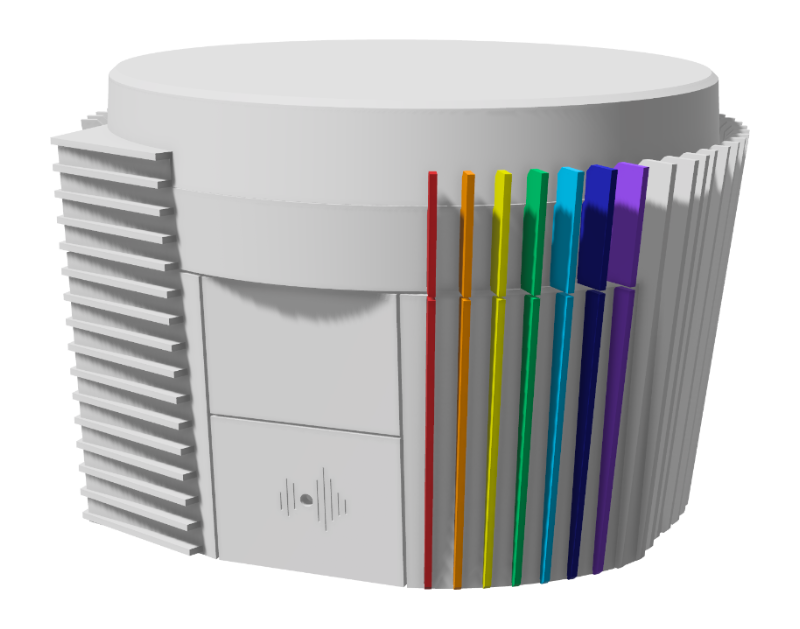
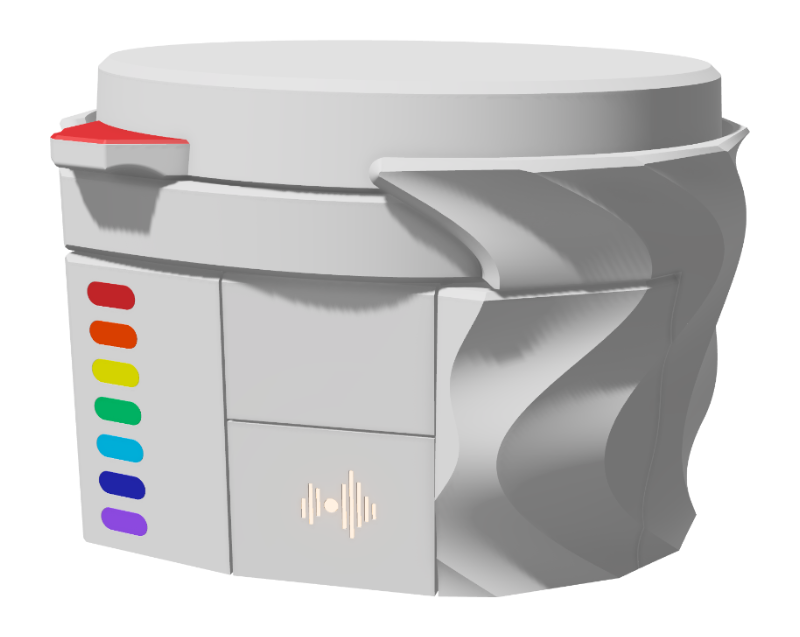
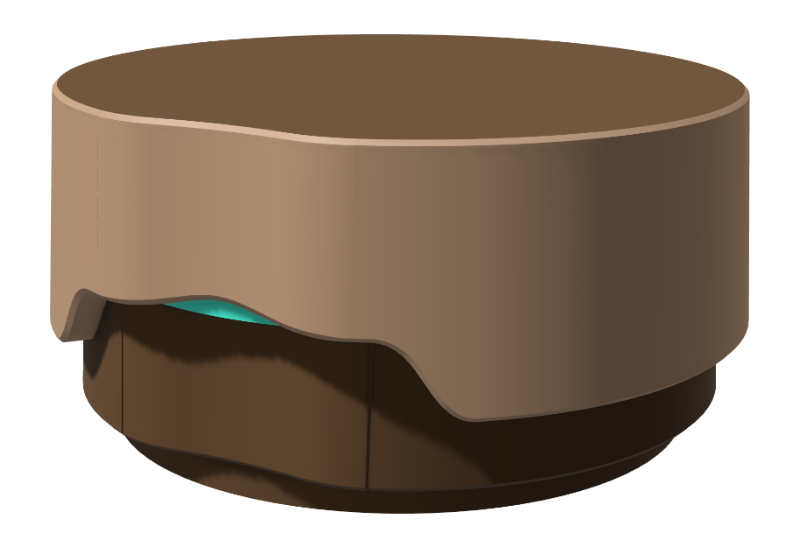
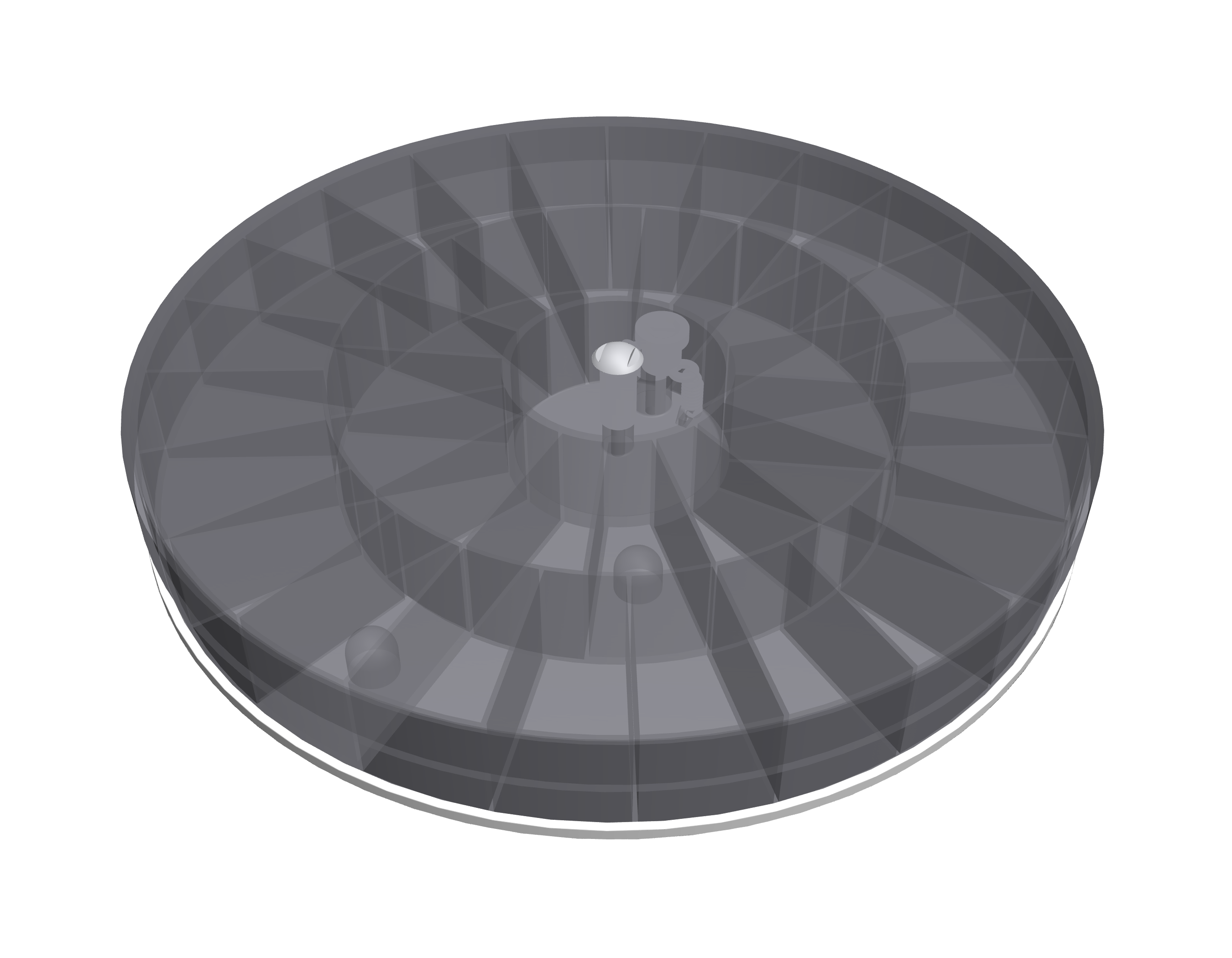
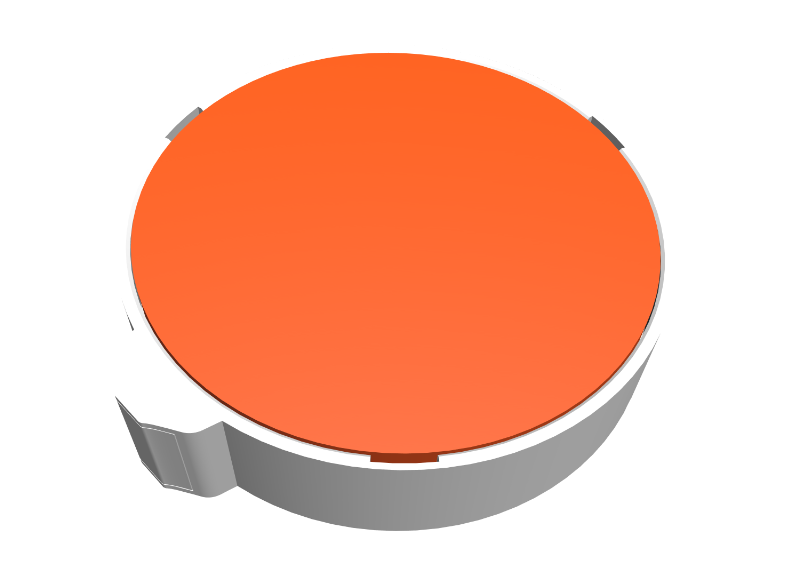
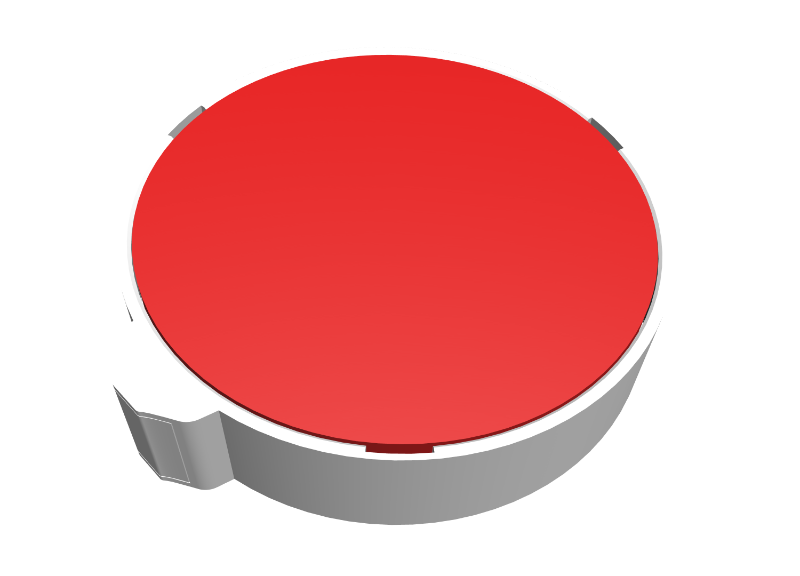
First conceptual form, rough proportions. Intentionally a bit Darth Vader as a creative stimulus.
Perché: Ergonomics verification and spatial footprint in the domestic context. Few technical details already established.
Form revised to contain the mechanics already planned and give a reassuring appearance suited to a domestic environment.
Perché: The overall mechanical dimensions are already defined for the tablet and capsule dispenser only.
Form revised to also accommodate sachets and vials and make it compatible with additive printing. Element added for possible user customization.
Perché: The model must include all functionalities covered by the claims in the first patent application. For rapid validation, the prototype must also be fully manufacturable in-house with a professional 3D printer.
New more compact form with equivalent functionality. Redesigned top opening to match the new refillable cartridge design. New body material selection.
Perché: Testing of the refillable cartridge had revealed difficulties resolved through a rethink of the cartridge structure itself.
Refinement of proportions, joints and surfaces with smooth transitions. Decorative elements added during reflection on values to communicate.
Perché: Approaching the desired aesthetic-functional balance and consolidation of claims in the new priority patent application.
Final geometry consolidated. No superfluous elements. Essentiality and simplicity for dispensing capsules and tablets. Compact dimensions: 12 cm height and 12 cm radius.
Perché: Balance between aesthetics, function and industrial manufacturability. The choice of materials and thicknesses is made with the goal of obtaining functional prototypes suitable for small-scale production.
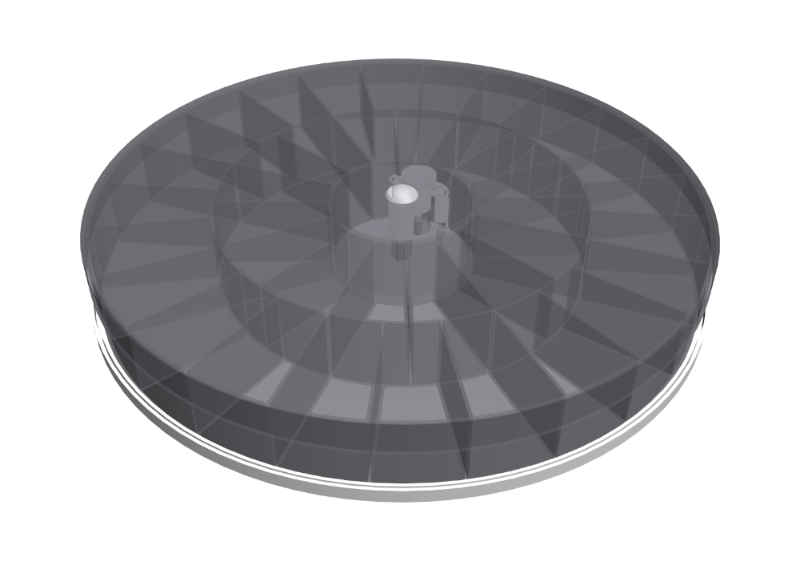
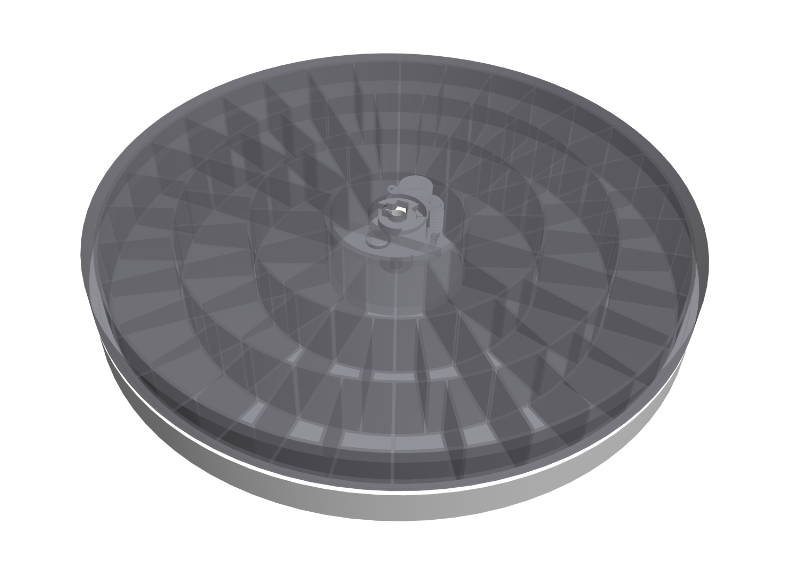
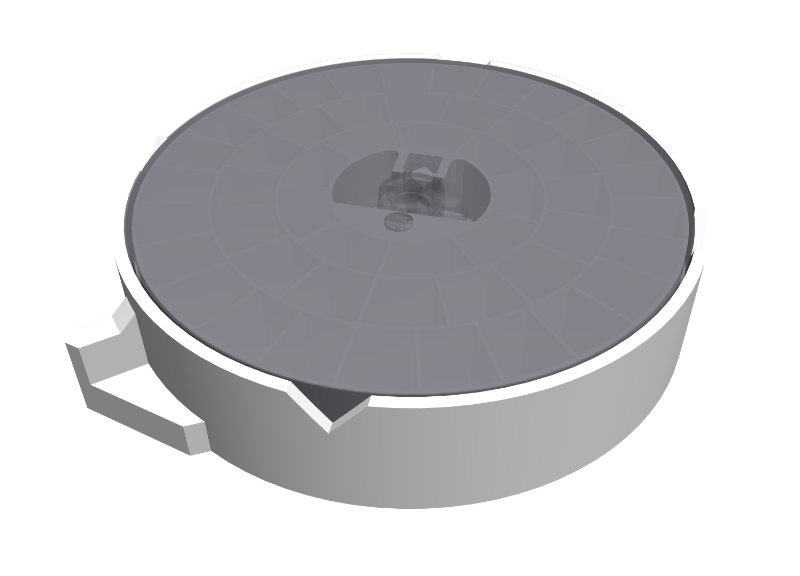
First compartment geometry arranged in two circular rings. One unusable slot per ring. Unlocking mechanism with circular ring magnet on the lid.
Perché: Compatibility test with the initial dispensing mechanism.
Intermediate disk added to recover the unavoidably unusable slots of the previous version.
Perché: Better use of the cartridge's maximum capacity.
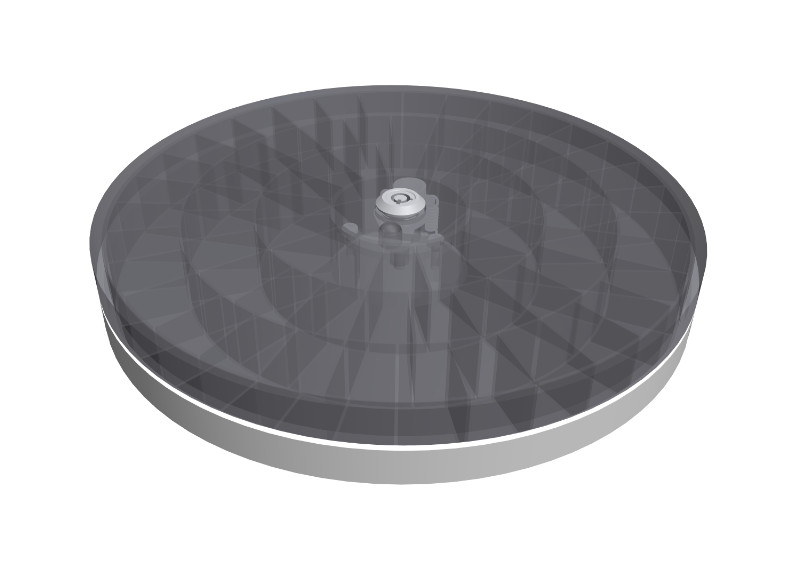
New medication distribution across three circular rings. New closure system, disk and internal blister unlocking. Firmware supports dispensing across multiple slots when needed.
Perché: Each slot size was oversized relative to average needs. Oversized cases can be handled by firmware.
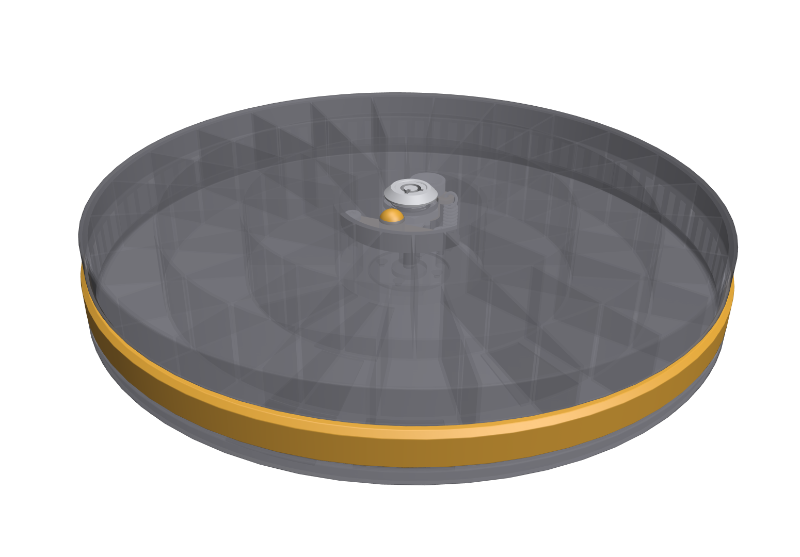
Closure mechanism optimization and introduction of a band in different colors for easy identification.
Perché: Support for multiple cartridges with visual identification in addition to RFID/NFC TAG identification.
Cartridge closure achieved without an additional lock. Reduced components to assemble for simpler assembly.
Perché: Reduction of third-party components.
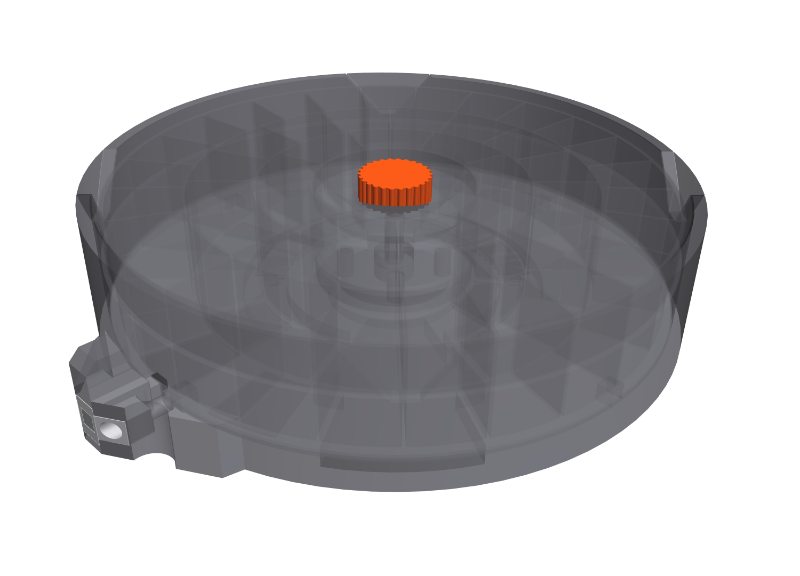
Redesign of the cartridge with the outer shell integral to the outer container after attachment. Use of gear wheels only, without arm mechanisms.
Perché: The cartridge's outer part was moving inside the device.
Locking system moved from the central zone to the peripheral zone, with magnetic unlocking. The coupling device is now fully inside the cartridge, which can now rest perfectly flat.
Perché: Simplified locking and unlocking of internal disks and the internal blister. The cartridge could not be fully rested on a horizontal surface due to the coupling system protrusion.
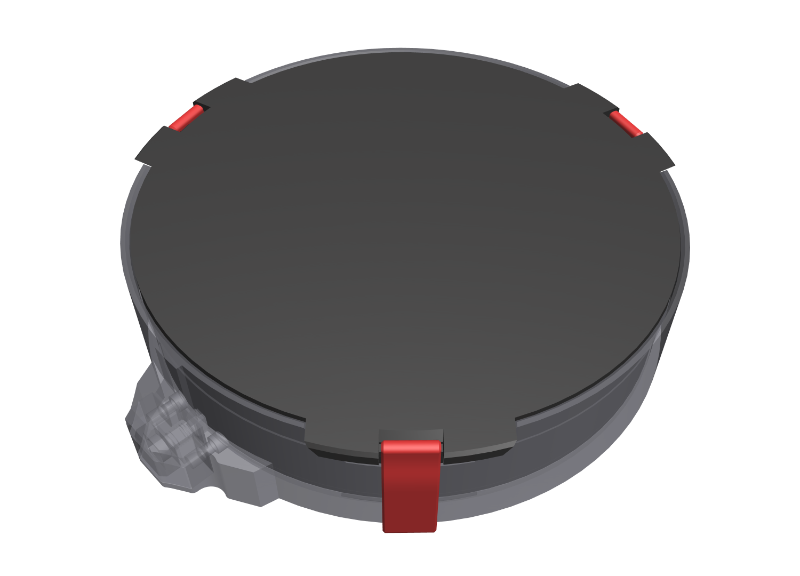
Moving parts fully enclosed inside the cartridge's outer shell. Lid with pressure lever closure and integrity guaranteed by tamper-evident seals.
Perché: Safety requirement: no moving part accidentally accessible to the user. Tamper verification.
Lid with bayonet magnetic closure safe even in the presence of children. New internal movement management.
Perché: Safety requirement: tamper seal ineffective against opening by a child. Reduction of the total number of motors needed to ensure dispensing.
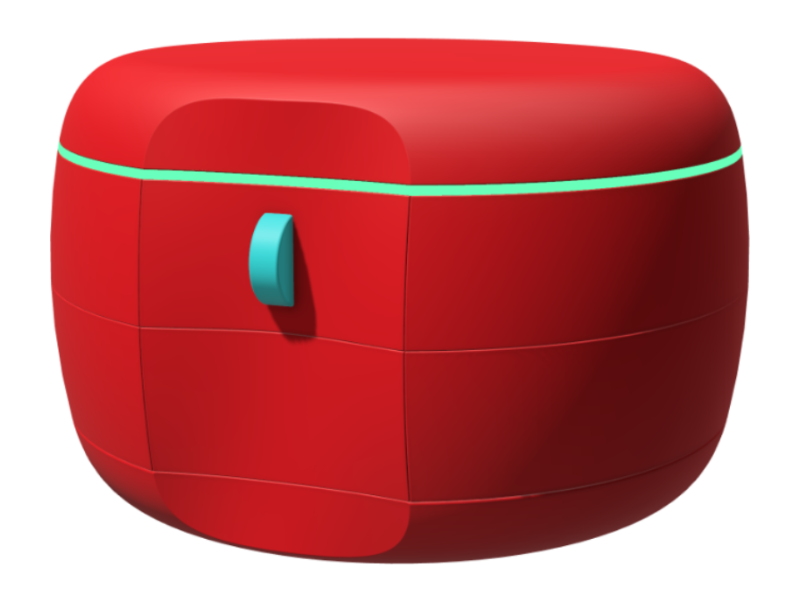
Recharging system optimized for industrial production and integration with pharmacy recharging system. Lid, body or closure mechanism available in different colors for visual identification, in addition to RFID/NFC TAG.
Perché: Definitive functional, aesthetic and productive balance.
The work, up close.
Some elements during development, versions of the body and refillable cartridge, photographed along the way. Each form carries the marks of what came before.
The Omiari system
An ecosystem designed to work together.
Each component reinforces the others.
Home device
Dispenses the right dose at the scheduled time and records intake through integrated sensors. The refillable cartridge can serve up to two patients on the same device and is designed to be refilled at the pharmacy: the first point of contact between home and healthcare providers. Every event is transmitted to the cloud in real time.
Alexa integration
The Amazon Alexa Skill manages bidirectional commands: the patient can ask about the next dose, confirm an intake or receive a voice reminder. A channel for everyone, designed especially for those who use a smartphone with difficulty.
"Alexa, open Omiari."
Designed to belong
Omiari is designed to live in the home. The form, materials and proportions respond to real domestic environments: living rooms, kitchens, nightstands. An object that blends into the furnishings is more likely to be used consistently.
Pharmacy refill
The cartridge is refilled at the pharmacy, without relying on disposable blisters or sachets. The pharmacist becomes the natural first point of contact between the patient and the healthcare system. No waste material, no manual therapy preparation at home.
Therapy management
Coordinates the device, Alexa Skill, app and notifications in real time. Manages complex therapy plans, with regularly scheduled medications and others as needed. Tracks adherence over time and maintains secure communication between patient, caregiver, attending physician and pharmacy.
Mobile app
Provides distinct views for patient and caregiver, with push notifications when a dose has not been taken or events require attention. Available on iOS, Android and browser. Adherence history and summary reports are also useful during medical appointments. Initial device setup is guided through the app or the Alexa skill.
Are you in pharma or medtech?
If you are an investor or a company interested in bringing Omiari to market, now is the right time to talk.